Keywords



 4'22", 55Mb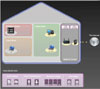

As networking moves into the home, home users are increasingly being faced with complex network management chores. Previous research, however, has demonstrated the difficulty many users have in managing their networks. This difficulty is compounded by the fact that advanced network management tools - such as those developed for the enterprise - are generally too complex for home users, do not support the common tasks they face, and are not a good fit for the technical peculiarities of the home. This paper presents Eden, an interactive, direct manipulation home network management system aimed at end users. Eden supports a range of common tasks, and provides a simple conceptual model that can help users understand key aspects of networking better. The system leverages a novel home network router that acts as a "dropin" replacement for users' current router. We demonstrate that Eden not only improves the user experience of networking, but also aids users in forming workable conceptual models of how the network works.

 10'48", 198Mb
Help-seeking communities have been playing an increasingly critical role in the way people seek and share information. However, traditional help-seeking mechanisms of these online communities have some limitations. In this paper, we describe an expertise-finding mechanism that attempts to alleviate the limitations caused by not knowing users' expertise levels. As a result of using social network data from the online community, this mechanism can automatically infer expertise level. This allows, for example, a question list to be personalized to the user's expertise level as well as to keyword similarity. We believe this expertise location mechanism will facilitate the development of next generation help-seeking communities.